Bark and Rind: An illustrated guide on edible cheese rinds
You are holding a piece of a dead thing. It’s a wheel of Brie, or a wedge of Stilton, or a block of Gruyère. It has a skin. A barrier. A perimeter designed to keep the world out and the rot in.
Welcome to Bark and Rind.
In the sterilized, plastic-wrapped aisles of 2026, we’ve forgotten that cheese is a biological war zone. The rind is the front line. It’s the scar tissue of the aging process. And the question you’re asking—the one that brought you to LustForCheese.com while you stand over your kitchen sink at 2:00 AM—is simple: Can I eat the bandage, or will it kill me?
Here is your guide to the anatomy of the edible.

The Rule of the Living Rind
If the rind was grown, you eat it. If the rind was manufactured, you discard it. It’s the difference between a natural scab and a prosthetic limb.
1. The Bloomy Rind (The Soft White Velvet)
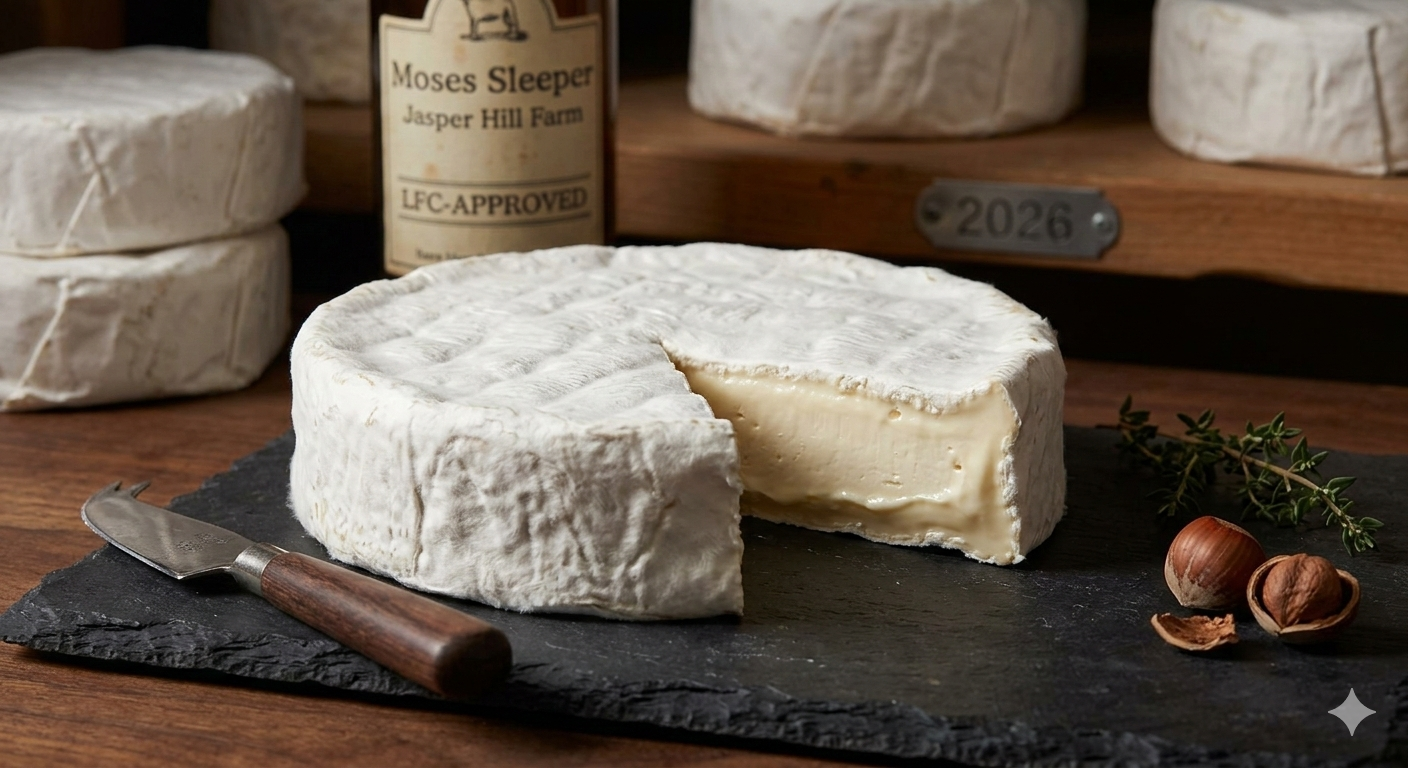
This is the skin of Camembert and Brie. It’s Penicillium camemberti. It’s a white, fluffy fungus. It’s soft. It’s mushroomy. It’s the soul of the cheese.
- Verdict: Edible. To cut the rind off a triple-cream is to lobotomize the experience. You’re throwing away the best part of the story.
- Brand Highlight: Look for Jasper Hill Farm’s Moses Sleeper. It’s a domestic masterpiece with a rind that tastes like toasted hazelnuts and damp earth.
2. The Washed Rind (The Stinky Orange Funk)
These are the cheeses that smell like a wet dog in a hot basement. Epoisses. Taleggio. They are bathed in brine, beer, or brandy to encourage Brevibacterium linens to take up residence.
- Verdict: Edible. It’s gritty. It’s salty. It’s pungent. It’s an acquired taste, like a car crash you can’t look away from. Eat it.
3. The Natural Rind (The Stone and Dust)
Think Tomme de Savoie or cloth-bound Cheddars. These rinds are hard, dusty, and look like something you’d find at a construction site. They are formed naturally by the air in the cave.
- Verdict: User Preference. They can be bitter. They can be tough. But they aren’t toxic. They are the history of the cheese written in dust.
The Artificial Barriers (The Do-Not-Eat Zone)
Then there are the rinds that are just lies. They are the plastic surgery of the dairy world.
1. Wax and Paraffin
Gouda. Manchego. Edam. They are dipped in red or black wax to stop moisture from leaving. It’s a sarcophagus.
- Verdict: Inedible. Unless you enjoy the texture of a birthday candle, peel it off.
- Tool Tip: Use a skewer or a high-carbon steel knife to strip the wax without mangling the paste beneath.
2. Cloth and Plastic
Some cheddars are wrapped in muslin soaked in lard. Some industrial blocks are vacuum-sealed in plastic “rinds.”
- Verdict: Inedible. If it feels like fabric or a Ziploc bag, it’s not food. It’s packaging.
The Science of the “Crunch”
Why does your Parmigiano-Reggiano rind feel like you’re chewing on gravel? Those aren’t rocks. Those are crystals of tyrosine.
Tyrosine is an amino acid that clumps together as the cheese ages and the proteins break down. It’s a sign of maturity. It’s a sign that the cheese has seen things. While the rind of a Parmesan is technically edible, it’s usually too hard to chew without risking a dental emergency.
- The Hack: Save your rinds. Throw them into a simmering minestrone or a slow-cooked ragu. The heat extracts the umami, the salt, and the essence of the age. It’s recycling the dead.